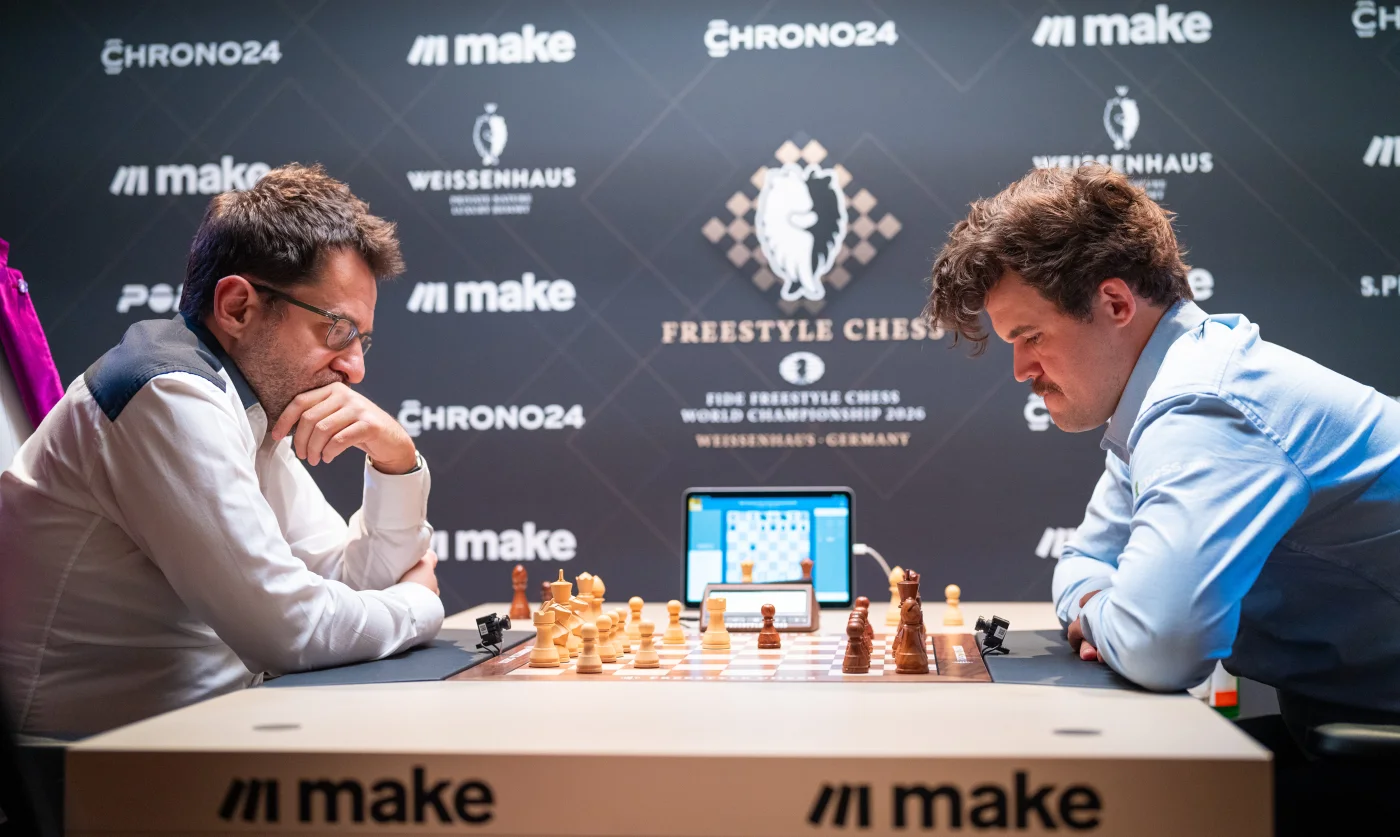
History is often written by the winners, but in the case of the 2026 FIDE Freestyle Chess World Championship, the real story lies in the "Accord" that allowed the pieces to be set on the board in the first place. If 20th-century geopolitical history was defined by the opening of the Soviet Union through Glasnost (openness) and Perestroika (restructuring), then the chess world has just lived through its own version of a structural revolution.
For decades, the royal game was locked in a rigid, bureaucratic framework. Professional chess was a monolith of memorization—a "cold war" of home preparation where supercomputers dictated the first thirty moves. But last week at Schloss Weissenhaus, that monolith finally cracked. What emerged was not a split, but a surprising, high-stakes synthesis between the rebel "Freestyle" movement and the traditional governing body, FIDE.
The Perestroika: Restructuring the Board
The "restructuring" began not with a federation vote, but with a frustration. Magnus Carlsen's decision to abandon the classical crown in 2023 was the catalyst. He sought a return to the romantic era of chess—a time when players had to rely on their own wits rather than an engine's "book."
By partnering with entrepreneur Jan Henric Buettner, Carlsen created the Freestyle Chess Grand Slam Tour. This wasn't just a tournament; it was a new economic and competitive structure designed to bypass the existing FIDE hierarchy. They rebranded Chess960 into "Freestyle Chess," injected millions in venture capital, and treated the grandmasters like Formula 1 drivers. The message was clear: if the old structure wouldn't adapt, a new one would be built alongside it.
The Glasnost: A Necessary Openness
The "openness" came later, and more unexpectedly. Throughout 2024 and 2025, the relationship between Carlsen's camp and FIDE was characterized by public feuds and legal threats. FIDE initially viewed Freestyle as an existential threat to its authority, while the Freestyle organizers saw FIDE as an "amateur" obstacle to progress.
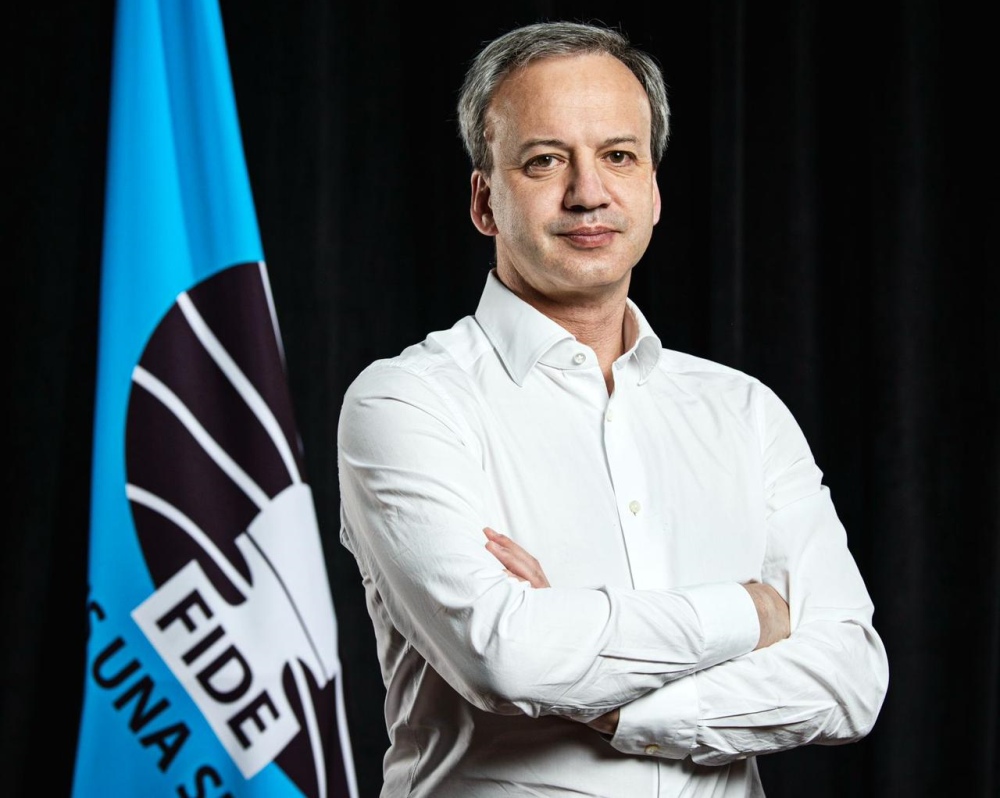
However, the Weissenhaus Accord of January 2026 signaled a dramatic shift in policy. FIDE President Arkady Dvorkovich and CEO Jan Henric Buettner realized that a divided house could not stand. FIDE opened its doors, granting the event official "World Championship" status. In return, the Freestyle movement agreed to operate within the global chess ecosystem.
This "Chess Glasnost" allowed for a level of transparency and collaboration rarely seen in the sport's history. It proved that private innovation and institutional tradition could coexist, provided both sides were willing to trade a bit of control for a lot of growth.
The Human Element: Magnus and the "Bar Fight"
While the tournament's concept was the star, the drama on the board provided the necessary proof of concept. In the final, Magnus Carlsen faced his long-time rival Fabiano Caruana. In a traditional classical setting, these two are known for theoretical draws. In the Freestyle format, they were forced into what Carlsen called a "bar fight."
Game 3 of the final will go down in history as the quintessential Freestyle moment. Carlsen was objectively losing to Caruana's precise calculation. In a standard game, the "book" would have dictated the path to a draw or a loss. Here, there was no book. Carlsen used the psychological vacuum of the randomized position to create chaos. Under the pressure of a ticking clock and a board he hadn't memorized, Caruana—one of the greatest minds in the history of the game—blinked.
Carlsen's eventual victory, securing his 21st world title, was the ultimate validation of the format. It showed that the best player is not the one who remembers the most, but the one who calculates the best in the face of the unknown.
A New Heritage for 2026
What does this mean for the future? The success of the 2026 World Championship suggests that we are entering a "dual-track" era. Classical chess remains the heritage, the slow-burning drama that honors 500 years of theory. But Freestyle is the future—a fast-paced, digital-first product that levels the playing field for players and fans alike.
As the tour expands to five continents later this year, the "Weissenhaus Accord" will be remembered as the moment the chess world chose evolution over extinction. By embracing both Glasnost and Perestroika, the game has ensured that the "Chaos King" and the traditional federation can share the same throne.