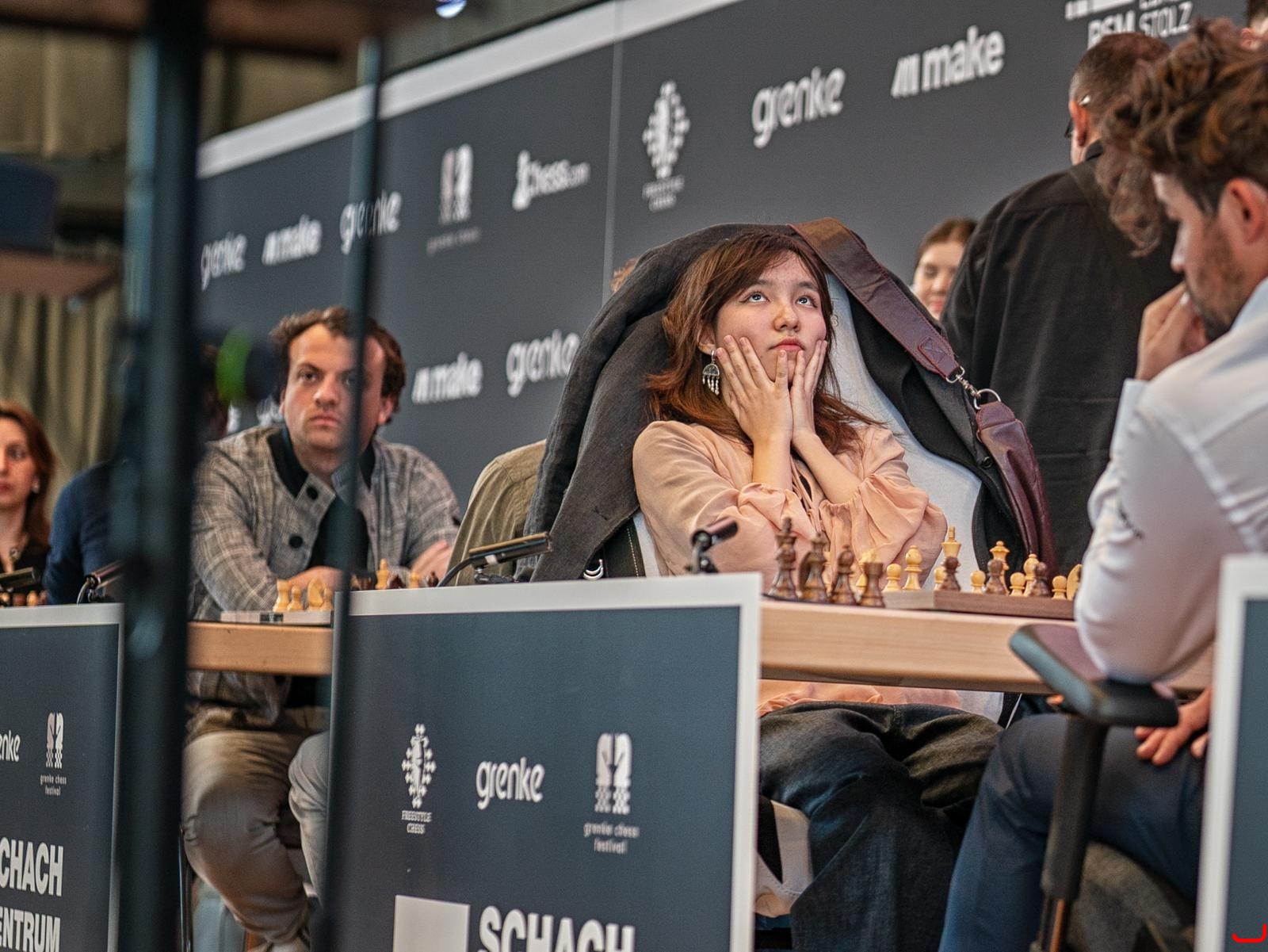
The recent draw of Position 534 at the GRENKE Freestyle Open 2026 sent a visible shiver through the commentary booth. Peter Leko, a man who has seen every corner of the 64 squares, didn’t mince words, calling it the “nightmare of nightmares.”
For the uninitiated, 534 looks like a prank. It is the uncanny valley of chess: the standard setup, but with the king and queen swapped (RNBKQBNR). It’s the setup you see in poorly researched Hollywood movies or stock photos that make GMs cringe. But in the world of Freestyle, it represents a profound philosophical and structural challenge.
Freestyle Chess Position #534
The castling asymmetry
Why the drama? If it’s just the king and queen swapped, isn’t it just normal chess with the king on the other side?
Absolutely not. The trouble lies in the castling mechanics. In Freestyle Chess, the destination squares for castling remain identical to traditional chess: c1/g1 for White and c8/g8 for Black.
- In standard chess (518): To castle kingside (O-O), the king moves two squares from e1 to g1.
- In Position 534: To castle kingside, the king must travel three squares from d1 to g1. Conversely, queenside castling (O-O-O) becomes a one-step hop from d1 to c1.
This fundamentally breaks the muscle memory of every professional on the planet. The king is suddenly safer the long way and more exposed in the center. Early engine evaluations suggest a +0.54 advantage for White after 1.d4, a significant departure from the +0.3 or +0.4 we see in the starting position of 518. It is a position that rewards the cold logic of the machine and punishes the intuition of the human.
Preparation is possible
Perhaps the most startling revelation of the GRENKE Freestyle Open 2026 didn’t happen on the board, but in the post-game interview. Over 3,500 chess players from around the globe gathered in Karlsruhe, and GM Vincent Keymer provided a masterclass in why Freestyle doesn’t necessarily mean blind.
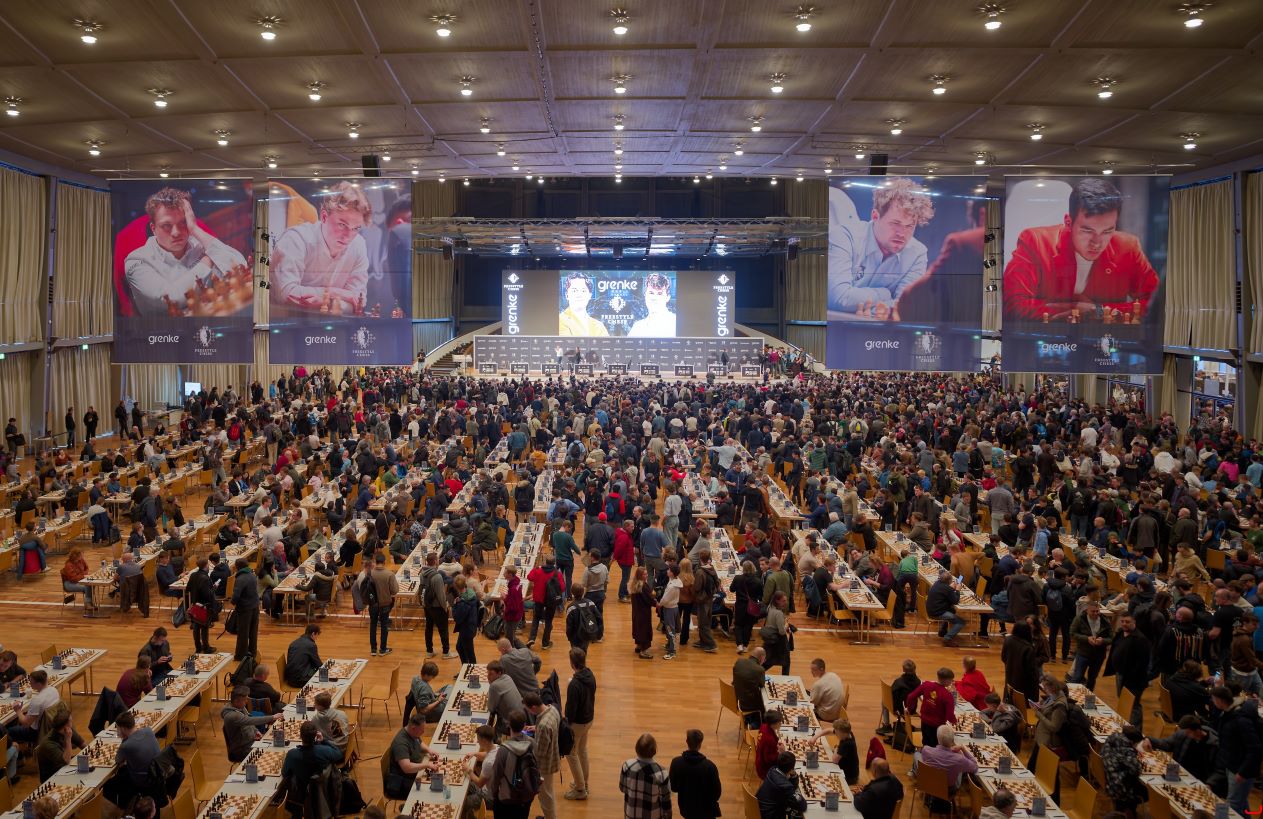
While most players were staring at Position 534 as if it were a logic puzzle from another dimension, Keymer was experiencing a strange sense of déjà vu as he had analyzed this specific setup a year prior in Paris.
Keymer’s assessment was a cold splash of water for those who believe Freestyle is immune to preparation: “After 1.d4, Black is already worse. I was glad my opponent played 1.e4,” he said.
Should we ban or celebrate?
There is a growing whisper in the corridors of major tournaments: should we curate the 960? Should we ban the freaks like 534, or positions where one side starts with a +1.5 advantage?
If we start down the path of “Chess 959” or “Chess 958,” we enter a dangerous slippery slope. The soul of Freestyle is the 960. The moment we begin filtering positions based on comfort or conventionality, we are merely reinventing the very constraints that Fischer Random was designed to shatter.
At Freestyle Chess AI, we strongly believe 534 shouldn’t be banned; it should be celebrated as the ultimate test of a player’s ability to strip away the chess-themed wallpaper of their mind and see the board for what it actually is: a series of coordinates and piece relationships.
The solution: fairness through format, not exclusion
The fear of 534 isn’t about the weirdness; it’s about the imbalance. If White has a structural advantage that is too high to overcome at the elite level, the game loses its competitive integrity.
The answer isn’t to shrink the pool of positions, but to refine our tournament designs. To counteract the strong side advantage, we must move toward balanced pairs:
- The double-round match: Players must play both sides of the same position against each other. If Position 534 is “broken” for White, both players get their chance to exploit it.
- Bidding for time: A more radical approach involves players bidding for the side they want with a time handicap. If you want the White side of 534, you might have to play with 30 minutes vs. Black’s 60.
The path forward
At freestylechess.ai, we believe in the integrity of the full spectrum. Our provably fair position randomizer ensures that every draw is transparent and untampered. Whether the randomizer hands you the comfort of 518 or its twisted sister 534, the challenge remains the same: find the truth on the board.
Leko might call it a nightmare, but for the next generation of Freestyle specialists, Position 534 is where the real game begins.
Try position #534