In a move that signals the "democratization" of chess's newest format, the GRENKE Chess Festival has announced that its 2026 edition will serve as the first-ever open qualifying path to the FIDE Freestyle Chess World Championship.
The announcement, made jointly by the Baden-Baden Chess Center and Freestyle Chess, marks a pivotal moment for the variant formerly known as Chess960. By opening a direct route for any player to reach the World Championship stage, organizers are effectively ending the era where Freestyle was an invitation-only "super-tournament" circuit.
The "Karlsruhe Format": Flexibility and Scale
From April 2 to 6, 2026, the Karlsruhe Congress Center is expected to host upwards of 3,000 participants. What makes this festival unique is the parallel structure: the GRENKE Freestyle Chess Open will run alongside the traditional GRENKE Chess Open (classical chess).
In a nod to the fluid nature of the festival, a "switch" rule remains in effect: players in the classical open have the option to migrate to the Freestyle tournament up until the fifth round. Both tournaments will feature a grueling nine-round Swiss system under classical time controls, ensuring that the "randomness" of the starting positions is balanced by deep, traditional calculation time.
High Stakes and Global Implications
The shift in status is reflected in the massive financial backing of the event. The Freestyle Chess Open boasts a total prize fund of €215,000, with the winner of the "Open A" section taking home €60,000.
However, the prestige outweighs the purse. For the first time, an "Open" player—regardless of their current world ranking—can secure a seat at the 2027 FIDE Freestyle Chess World Championship. Furthermore, the tournament will serve as a critical gateway for the women's game, with the three highest-ranked female players in Open A earning spots in the 2026 FIDE Freestyle Chess Women's World Championship.
The Return of the King
The field will be headlined by Magnus Carlsen, fresh off his recent World Title victory in Weissenhaus. Carlsen has developed a special affinity for the Karlsruhe venue; in 2025, he achieved the rare "perfect score," winning all nine of his games in a performance that many considered a statistical anomaly at the elite level.
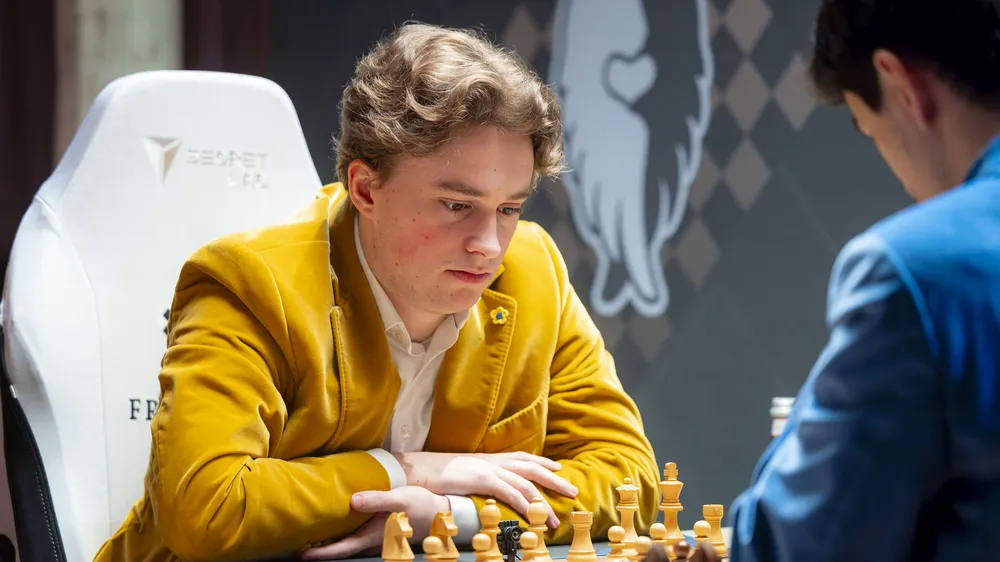
Joining him will be Germany's top talent, Vincent Keymer, who has become a vocal advocate for the Freestyle format as a means of reviving the "human" element of the game.
"Karlsruhe has been synonymous with open chess on an extraordinary scale for years," said tournament director Sven Noppes. "In 2026, we combine this scale with a clear sporting perspective: World Championship qualification in an open tournament."
Analysis: A New Era of Professionalism
This development is the latest evidence of the "Weissenhaus Accord" in action. By integrating the Freestyle World Championship cycle into established festivals like GRENKE, the format is shedding its image as a "rebel tour" and becoming a formalized career path for professional players.
For the international chess scene, the 2026 GRENKE Festival represents a "proof of concept." If a 3,000-player open can successfully manage randomized starting positions at scale, it may well prove that Freestyle is not just a boutique interest for the world's top ten, but a viable future for the sport as a whole.